Our Sponsor
Wednesday, October 13, 2010
Possesion with Particle 의 [ui].
Possession with Particle 의 [ui].
You know how we use 's in english to refer possession of something.. well this usage is quite similar to particle 의 [ui] in hangul.
There are 3 different ways to make a possesive construction:-
a) NOUN의 NOUN
For example
크리스의 선생 {chris's teacher}
b) NOUN NOUN
For example
선생님 와인 {teacher's wine}
c) NOUN[squeeze!] NOUN
In (c) case, the first alphabet of the 2nd NOUN will be 'squeeze' or doubled in pronounciation.
This will only apply to ㅂ, ㄷ, ㅈ, ㄱ and ㅅ.
For example :-
선생님 것 [껏 in pronounciation].
Korean sentences do not usually ends with possesive phrases.
For example
That whiskey is the teacher's.
그것은 선생님의 위스키예요.
[geugeos-eun seonsaengnim-ui wiseuki-yeyo]
This literally means : that thing is the teacher's whiskey.
or it can be
그 위스키는 선생님의 것이에요.
[geu wiseuki-neun seonsaengnim-ui geos-ieyo].
still with the same meaning.
but this one literally means : that whiskey is the teacher's thing.
Other examples....
1. Is this house Yongjin's?
이 집은 영진씨(의) 집이에요?
[i jib-eun Yongjin-ssi(ui) Jib-ieyo?]
이 = this.
집 = house.
2. whose newspaper is that? It's mine.
저 신문이 누구(의) 신문이에요? 제 신문이에요.
[Jeo sinmun-i nugu-ui sinmun-ieyo? Je sinmun-ieyo.]
저= that.
신문 = newspaper. With subject particle 이. Read 'subject particle' entries to learn more about it.
누구 = whose/who
제 = mine.
3. whose cigarrettes are those? They're mine.
저 담배가 어느 분(의) 것이에요? 제 것이에요.
[Jeo dambae-ga eonue bun(ui) geot-ieyo? Je geot-ieyo.]
담배 = cigarrettes.
어느 분 = whose. But 어느 can also mean 'which'.분 means 'person' in a formal term.
4. whose cat is that? That cat is Mr Kim's.
저 고양이가 어느 분(의) 고양이에요? 저 고양이는 김 선생님(의) 고양이에요.
고양이 = Cat.
I'm not gonna write down the romanization for the last one.. you should be able to read hangul by now so I trust you to figure it out. ;) cheers!!
Monday, October 11, 2010
To mark contrast using topic particle.
Another Topic particle (은~는) function is TO MARK CONTRAST.
For example:
1. 김 선생님은 의산이에요. 그렇지만 나는 엔지니어예요.
[Kim seonsaengnim-eun uisan-ieyo. geureohjiman na-neun enjinieo-yeyo].
{Mr Kim is a doctor. But (me) I'm an engineer}.
선생님 = Mr
의산 [uisan] = doctor.
그렇지만 [geureohjiman] = But.
나[na] = me.
As you can see, the topic particle (은/는) are attached to 'Mr Kim' and 'me'. Which is
to mark the contrast between the two in this sentence.
2. 김 선생님은 한국사람이에요. 그렇지만 나는 멜레이시아사람이에요.
[Kim seonsaengnim-eun hanguk-saram-ieyo. geureohjiman na-neun Mellesia-saram-ieyo]
{Mr Kim is a Korean. But I'm a Malaysian}.
한국사람이에요 [hanguk-saram-ieyo] = 'hanguk' means 'korea'. 'saram' means 'people/person' while '-ieyo' is the copula used (read copula entry to learn more). So when combined 'hanguk-saram' means 'korean'. This is similar to 'Mellesia-saram' which means 'Malaysian' except that in hangul 'Malaysia' is sounded as 'Mellesia'.
Now you should try create your own sentences and play around with topic particle and subject particle just to get familiar with it..
One of the ways to get familiar with it, i suggest, is to watch korean variety shows without sub! enjoi
Saturday, October 9, 2010
Heroes twitter updates - Nicole Jung
the first is..
on the 4th Oct 2010. Nicole twitted
Original Message : 영웅호걸촬영중 ! ㅋㅋㅋ 서프라이즈 ?
In English : During Heroes filming ! ke ke ke surprise?
and another is on the 6th of Oct 2010.
Original Message : 가족~맴버들 ~ 친구들~우리카밀리아~ 모두 기억해줘서 감사합니다 ! 웃으면서 자야지..^^ ㅎㅎㅎ .. ㅎ 한국처음왔을때16이였는데..ㅋㅋㅋ시간이많이지났어요그쵸?ㅋㅋ 고마워용 !! 다들 스윗드림즈에요 ~~ 매롱*뿅뿅!!
In English : Family ~ Members ~ All friends ~ our kamillia ~ Thank you ffor all the memories! I'm laughing to sleep.. ^^ he he he.. he I was 16 when I first came to Korea.. kekeke It has been awhile right? keke thanks!! Sweet dreams everyone ~~ Merong*뿅뿅!!
** you may be wondering. what is 'Merong' here? well to my shallow knowledge of the korean culture, it is a sound you make when you are playing with someone or a baby or when you kid around.. correct me if i'm wrong here..
cheers!
영웅호걸 화이팅!!!
Friday, October 8, 2010
Sentence Subject (이 ~가) & Topic (는 ~은)
In this entry we will learn about sentence subject and topic. In order to understand a sentence or to build a sentence we 1st need to understand how to use the subject particle (이 ~가) and topic particle (는 ~은).
Fist we need to keep in mind...
*when it is 1st time a subject is mentioned or when it is a new info
thus we attach 이/가 (-i/-ga) to it.
*When it is an old info or a repeated subject, thus we attach 는/은 (-neun/-eun)
to it.
For example.
A. 이것이 무엇이에요? [igeos-i mueos-ieyo?] {what's this?}
B. 그것은 우산이에요. [geugeos-eun usan-ieyo] {That's an umbrella}
이것[igeos] = the front part 이[i-] means 'this' and the other part
것 [geos/geot] means 'thing'. So when its 그것 [geugeot] it means 'that thing'
since 그[geu-] means 'that'.
무엇 = what.
우산 = umbrella.
You can create topics from any element (except verb) by pulling the element out of
place and saying it first (은~는 attached).
For example
"That student is studying Korean at school now"
A."That student은/는 is studying korean at school now."
-this sentence focus on 'What about that student'. New info is the nature of activity,
not who is doing it.
B."Now은/는 that student is studying Korean at school."
-this sentence is to mention 'what is happening NOW'.
C."At school은/는 that student is now studying korean."
-this sentence is to mention 'whats going on at school'.
Friday, September 24, 2010
Basic Expression 4
1. Please say it slowly.
천천히 말씀해 주세요. [choenchoenhi malseum juseyo]
천천히 = slowly
말씀해 = tell us
주세요 = Please
2. Please say it in korean.
한국말로 하세요. [hanguk-mal-ro haseyo]
한국 = korea
말로 = 말 means 'tell/say'.. and the particle 로 means 'by/in'.
3. Please dont say it in English.
영어로 하지 마세요. [yeoneo-ro maseyo]
영어 = English.
마세요 = Do not.
4. Do you understand?
알겠습니다?/알겠어요? [algessuemnida?/algesseoyo?]
The difference between the two is the 1st one is formal term and the 2nd is the polite term. Just keep in mind when it has '-mnida'
5. Yes, I understand.
네, 알겠습니다. [ ne, algesseumnida]
네 = Yes.
6. No, I dont understand.
아니오, 모르겠어요. [anio, moreugesseoyo]
아니오 = no.
7. Any question?
질문, 있어요? [jilmun, isseoyo?]
질문 = question.
있어요 = have
8. Yes, I have. 네, 있어요. [ne, isseoyo]
9. No, I havent.
아니오, 없어요. [anio, eobseoyo]
없어요 = have not.
10. Lets rest for ten minutes.
십 분만 쉽시다. [sib bum-man swibsida].
십 = ten.
분 = minutes.
만 = only.
쉽시다 = rest.
11. I'm sorry I'm late.
늦어서 죄송합니다. [neuweoseo joesonghamnida].
죄송합니다 = I'm sorry.
Wednesday, September 22, 2010
[Culture] what is Gumiho 구미호 ?
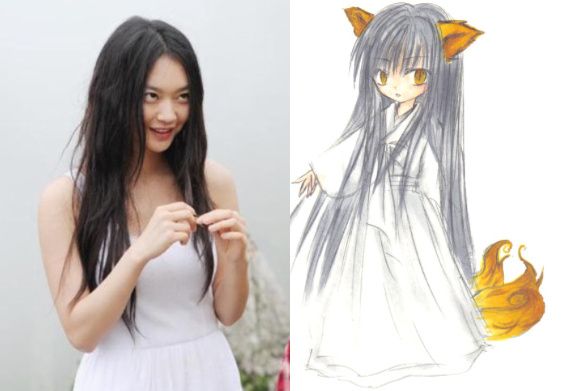
Well, one of the things I do to improve my korean language knowledge is to watch k-drama and lately I've been hooked with My Girlfriend is a Gumiho!! Yessss I highly recommend that you watch it too.... It is sooo funny and soooo touching. I especially like Shin Min Ah character in the drama. She plays a Gumiho who fell in love with a human and trying to become a human..
So what the hell is a GUMIHO (구미호)?

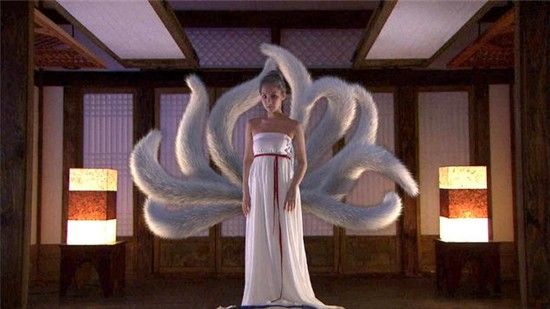
A gumiho [구미호] is a nine-tailed fox, a legendary creature with origins in ancient Chinese myths dating back centuries. There are versions of the figure in Chinese and Japanese folklore, although each differs slightly. The Chinese huli jing and the Japanese kitsune have more ambiguous moral compasses, in that they can be both good and bad, and are not necessarily out to get everyone. The Korean gumiho, on the other hand, is almost always a malignant figure, a carnivore who feasts on human flesh.
According to legend, a fox that lives a thousand years turns into a gumiho, a shape-shifter who can appear in the guise of a woman. A gumiho is evil by nature, and feeds on either human hearts or livers (different legends specify one or the other) in order to survive. The Chinese huli jing is said to be made up of feminine energy (yin) and needs to consume male energy (yang) to survive. The Japanese kitsune can be either male or female, and can choose to be quite benevolent.
The Korean gumiho is traditionally female. Some can hide their gumiho features, while other myths indicate that they can’t fully transform (ie. a fox-like face or set of ears, or the tell-tale nine tails). Either way there is usually at least one physical trait that will prove their true gumiho form, or a magical way to force them to reveal this form.
Much like werewolves or vampires in Western lore, there are always variations on the myth depending on the liberties that each story takes with the legend. Some tales say that if a gumiho abstains from killing and eating humans for a thousand days, it can become human. Others, like the drama Gumiho: Tale of the Fox’s Child, say that a gumiho can become human if the man who sees her true nature keeps it a secret for ten years. Regardless of each story’s own rules, a few things are always consistent: a gumiho is always a fox, a woman, a shape-shifter, and a carnivore.
Now on to the cultural meanings. A fox is a common figure in many different cultures that represents a trickster or a smart but wicked creature that steals or outwits others into getting what it wants. Anyone who grew up on Aesop’s Fables knows the classic iteration of the fox figure in folklore. And it’s not hard to see how the fox got such a bad rap. The animal is a nocturnal hunter and a thief by nature, and is known the world over for its cunning mind.
In Korea, the fox has a second cultural implication—that of sexual cunning. The word for fox, yeo-woo [여우] is actually what Koreans call a woman who is, for lack of a better translation, a vixen, a siren, or a sly man-eater. There is a similar English equivalent in the phrase “you sly fox,” although in Korean it’s gender-specific (only women get called yeo-woo), and has a much more predatory “there-you-go-using-your-feminine-wiles-to-trick-me” kind of meaning behind it. Women who use any sort of feminine charm in an overt way, or women who are overtly sexualized (as in, asserting and brandishing their sexuality in a bold way), get called “yeo-woo.” Interestingly, the word for “actress” [여배우] is the same in its shortened form: [여우].
It is not by mistake that gumihos are only beautiful women. They are a folkloric way to warn men of the pitfalls of letting a woman trick you or seduce you into folly. For an example, see this translation of a classic gumiho tale. In many stories the hero of the tale (always a man) has to “endure” the seduction and unclothe the gumiho, thereby revealing her true form. Thus a woman’s true nature, her hidden sexuality = demon.
The concept of female sexuality as dangerous is nothing new to folklore, for sure. But it’s not a stretch to say that both the gumiho figure and the use of “yeo-woo” are quite prevalent in modern culture and its fiction. Most people may gloss over the fact that the gumiho myth is a story designed to uphold patriarchy. But that’s what makes such a legend so cunning in its own right.
In film and tv, the gumiho can be both a horrific figure and a straight-up demon, or a comically laughable one, depending on the genre. And throughout the ages the gumiho legend has changed, as in Gumiho: Tale of the Fox’s Child ‘s take on the tortured gumiho with a kind soul who longs to be human and spares men’s lives. She is a reluctant demon who chooses to walk the fine line of morality in order to hold onto her human traits. This interpretation is much closer to the vampire-with-a-soul mythology, as one being battles the demon within.
All this isn’t to say that female writers couldn’t take ownership of such a legend and reclaim it. I think that’s the only way to take it out of this territory and blast all these old versions away with something empowered. Do I think that’s what the Hong sisters’ goal is? Not outright. And I’m definitely not going to be watching that rom-com for its stellar commentary on gender politics.
Source : http://www.dramabeans.com
You Can Download My Girlfriend Is A Gumiho Here : http://www.am-addiction.com/forum/index.php?showtopic=12998 [Need to register]
And you can also watch the stream vid Here : http://www.mysoju.com/my-girlfriend-is-a-ninetailed-fox/
Sunday, September 19, 2010
Happy Birthday Song in Korean
I luv celebrating birthdays!!.. I just luv the atmosphere of gathering with friends and just eat haha.. and then there's the birthday cake..
Tho I do like birthdays but I never really like celebrating mine.. I just enjoy organizing and celebrating my friends birthdays haha.. I know its kind of weird but yeah thats just me :)
I get the chance to sing Happy Birthday song in hangul yet coz well I will ended up singing by myself then coz my friends dont know hangul hoho.. tho someday I wish I could sing it along with people around just celebrating birthdays...
So the song goes like this...
새일 축하합니다
[Saengil chukhahamnida]
생일 축하합니다
[Saengil chukhahamnida]
사랑하는 <이름-이/ 씨>
[Saranghaneun
생일 축하합니다
[Saengil chukhahamnida]
축하합니다 actually means 'congratulation'.
Birthday in hangul is 생일 [saeng-il] where 일 means 'day'.
So to wish someone a Happy birthday would be...
- 생일 축하합니다 [saeng-il chukha-hamnida] this is polite formal way to say it
- 생일 축하해요 [saeng-il chukha-haeyo] this is the casual polite way
and if we translate syllable by syllable:-
년= Year
월= month
일= day
Thursday, September 16, 2010
Particle 도 [too, also, even].
In this entry we will be learning the usage of particle 도, which means too, also and even.
도 put emphasis on the word before it, with reference to something earlier in the context.
For example:
1. That pop singer is a korean too.
그 가수도 한국사람이에요. [geu kasu-do hanguk saram-ieyo]
그[geu] = that
가수도 [kasu-do] = 'kasu' means singer and 'do' particle means too.
한국사람 [hanguksaram]= korean. 'hanguk' means korea and 'saram' means person or people. so if we attach the two it means korea. you can look thru the older entries to learn more on this.
2. Mr Kim is a doctor too.
김 선생님도 의사예요. [ Kim Soensaegnim-do uisa-yeyo]
선생님 = teacher or Mr.
의사 = doctor.
note : the '-ieyo' and '-yeyo' particle are called the copula, you can click to learn more about it.
In negative sentence, English use 'either' but in korean 도 still does all the work.
For example.
1. This is a korean product. That is a korean product too.
이것은 한국 제품이에요. 저것도 한국 제품이에요. [igeos-eun hanguk jepum-ieyo. jeogeot-do hanguk jepum-ieyo]'
이것은 = means 'this'. with topic particle '-eun' points that 'this' is the topic of the sentence.
제품 = product.
Monday, September 13, 2010
Heroes twitter updates - JiYeon 140910
Friday, September 10, 2010
[Culture] Valentines Day, White Day, and Black Day ?
Valentines Day, White Day, and Black Day
All of these are related!
So, okay... wait, wait, wait a minute... 잠깐만 [jamkkanman] {wait a minute}... what is White Day and Black day??..haha I'll explain just keep reading...
On Valentines Day, girls will give chocolates and other gifts to the guys. It is similar to our Valentines Day but is more one-sided.
So, what should be done? White Day was created. On White Day, one month later on March 14th, guys will give more expensive chocolates and gifts to the girls. These chocolates come in white boxes. This way it isn't so one-sided!
But what about the people who feel left out on those days because they have nobody to give chocolates to? That is what Black Day is for! On Black Day, another month later on April 14th, people who have nobody all get together with their friends and eat JaJang Noodles, which are black in color. It is not as popular as Valentines Day and White Day, but it is still celebrated by some people!
On the 14th of every month of a year there's bound to be a celebration that's related to love in some way. To further explain my statement, below are the celebrations that take place on the 14th of each month:January 14 is Candle Day.
February 14 is Valentine's Day (a day which girls give chocolates or sweets to the boys they like).
March 14 is White Day. On this day, boys are supposed to give girls that they like some sweets (other than chocolates, although I don't know if this is still practiced today after seeing so many chocolates on sale with the words White Day taped across its covers in the local supermarket).
April 14 is known as Black Day. You'll know on March 15 whether or not you can celebrate Black Day. This day is for those individuals who had not received a single gift from anyone on either Valentine's or White Day, and they therefore gather together to eat jajangmien or black noodles.
May 14 is known as Rose Day.
June 14 is known as Kiss Day.
July 14 is known as Silver Day.
August 14 is known as Green Day.
September 14 is known as Music Day.
October 14 is known as Wine Day.
November 14 is known as Movie Day.
December 14 is known as Hug Day.I can't deny that Korea seems to have quite a lot of celebrations (for capitalistic reasons, I believe) but hey, maybe it's not such a bad thing. At least this way, everyone can have a reason to be extra happy and spend time with their loved ones especially on the 14th of every month. :-)